

Depth of Illumination in Surgical Lighting
Maintain useful illumination deep into the surgical field.
Peak illuminance tells only part of the surgical-lighting story. In deep cavities, the practical question is how far useful illumination is maintained through the surgical field. Depth of illumination is the measure that answers it.
What L1 + L2 measures
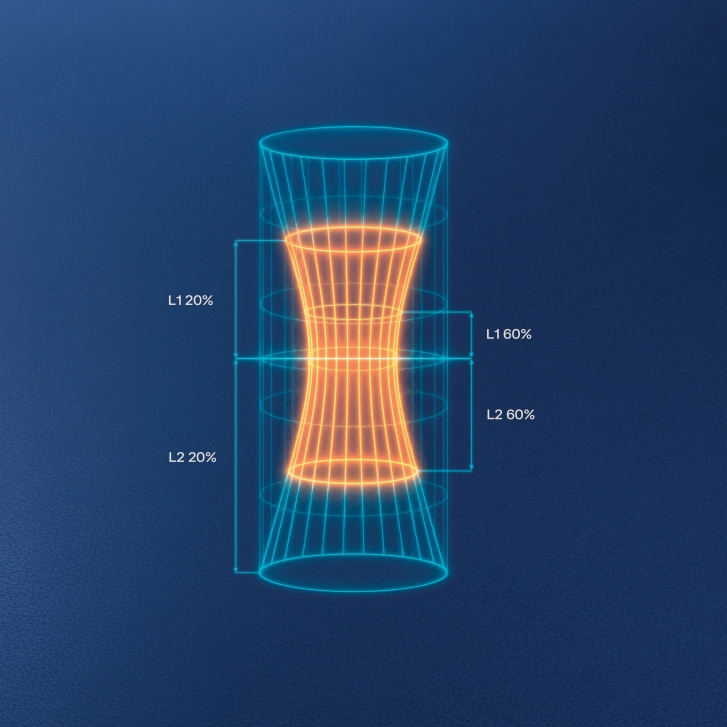
Depth of illumination is expressed as L1 + L2: the distance above and below the reference plane over which the beam maintains a defined proportion of its central illuminance. Quasar Qi publishes depth at both 20% and 60% illuminance so users can see how the beam performs under two different thresholds.
Quasar Qi depth performance
The technical specification gives the following L1+L2 values:
- Qi60 iSense: 2,100 mm at 20%; 1,100 mm at 60%.
- Qi30 iSense: 1,660 mm at 20%; 870 mm at 60%.
- Qi40 iLite: 2,100 mm at 20%; 1,100 mm at 60%.
- Qi30 iLite: 1,660 mm at 20%; 870 mm at 60%.
- Qi20 iLite: 1,580 mm at 20%; 790 mm at 60%.
Why depth matters in practice
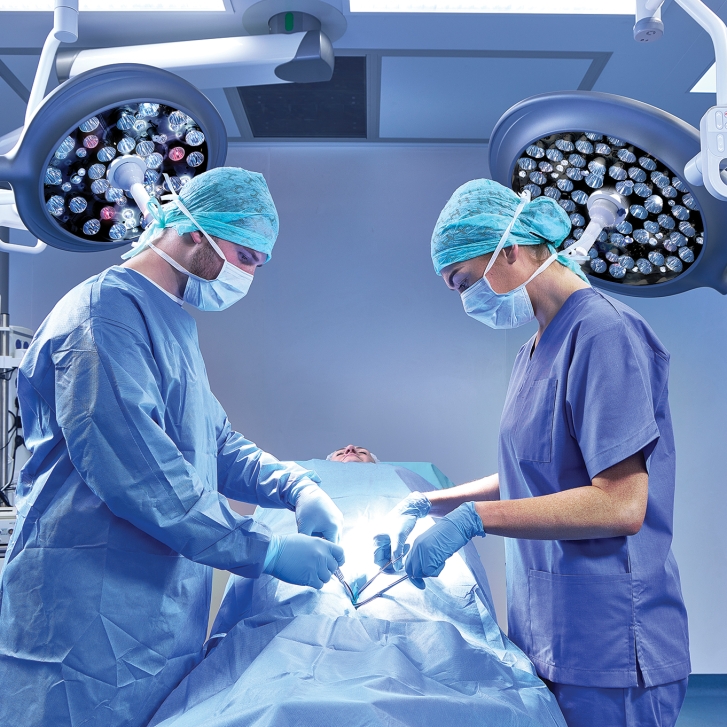
A deep, stable beam can reduce the frequency with which the light needs to be repositioned as the operative field changes. That supports continuity, particularly in deep or narrow fields where hands, instruments and anatomy can make repeated repositioning disruptive.
Depth should be assessed alongside field size, uniformity, shadow performance and colour quality. It is one part of overall visual performance, not a substitute for evaluating the complete light.

See the difference
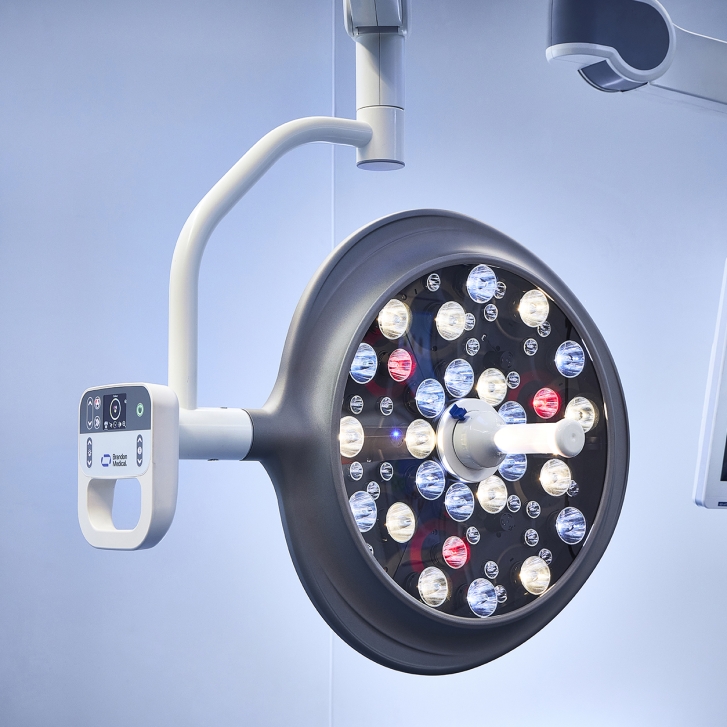
The most useful way to understand depth is to see it demonstrated. A side-on depth demonstration can show how the usable beam extends above and below the focal plane and how performance changes between models.
Available across the Quasar Qi range
The current technical table specifies Red Vision Boost Technology across Qi60 iSense, Qi30 iSense, Qi40 iLite, Qi30 iLite and Qi20 iLite.
Quasar Qi Features
Designed to do more than provide lux. Quasar Qi adds useful sensing, status information, workflow controls and integration-ready data.







It is the distance over which the surgical light maintains a defined proportion of its central illuminance above and below the reference plane. It is commonly expressed as L1 + L2.
They represent different thresholds of retained illuminance. Showing both gives a more complete picture of how the beam behaves through depth.
Qi60 iSense and Qi40 iLite are specified at 2,100 mm at 20% and 1,100 mm at 60%.
No. Surgical lighting still needs correct positioning and can be affected by anatomy, staff and instruments. Strong depth can reduce the frequency of adjustment but does not eliminate it.
No. Lux describes illuminance at a point. Depth describes how well useful illumination is maintained through distance away from the reference plane.