

iSense Environmental Intelligence | Make the invisible visible.
Many of the conditions that influence an operating theatre cannot be seen directly. Airborne particulates, rising CO2, surgical smoke, humidity, temperature and noise can change during a procedure without being obvious to the team. iSense is designed to make selected conditions visible and actionable.
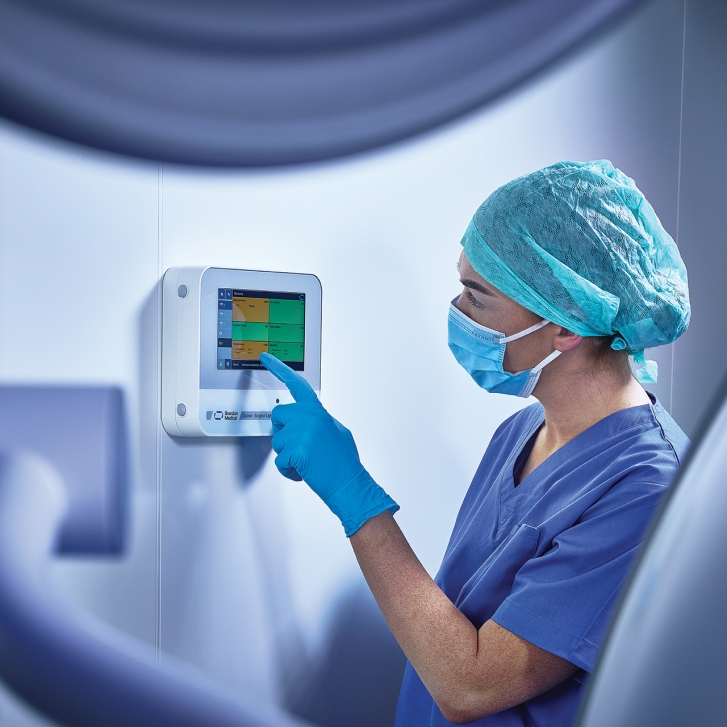
Environmental awareness close to the surgical field
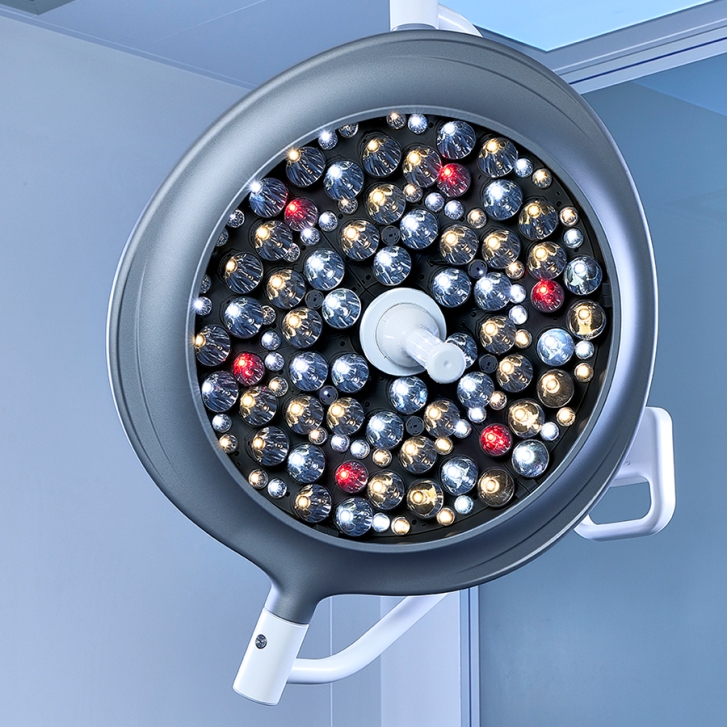
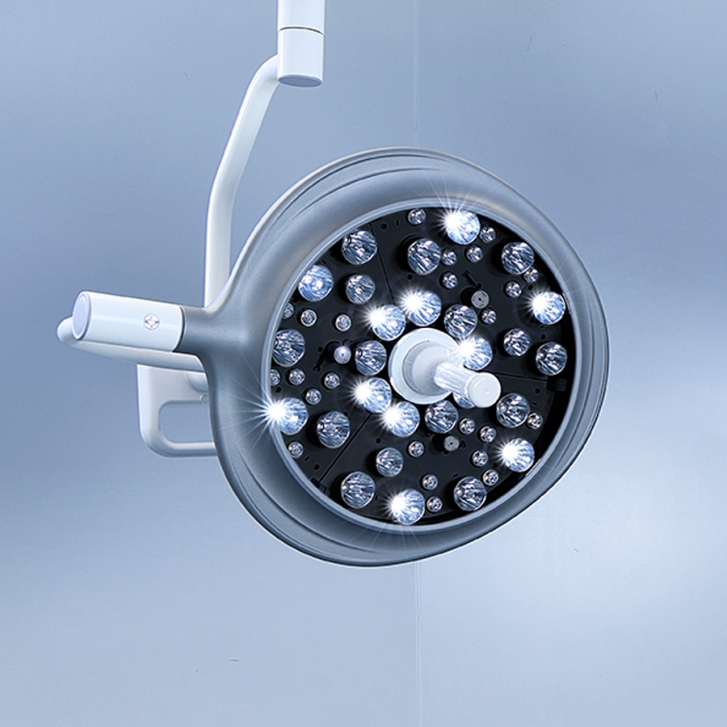
Positioning sensing technology within the surgical-light platform creates a monitoring point close to the patient and the area where the team is working. On Qi60, the full iSense environmental suite continuously monitors air quality indicators, CO2, noise, surgical smoke, temperature and humidity.
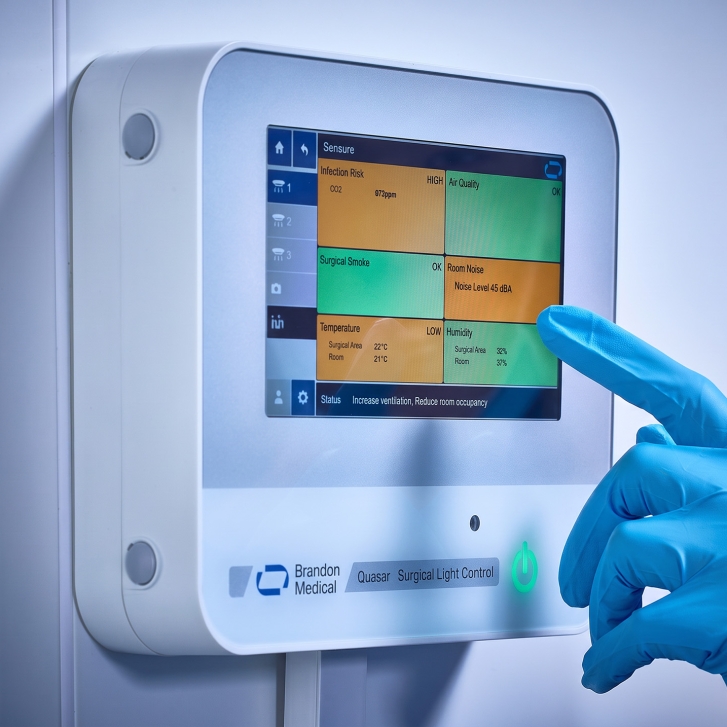
The information is presented through clear visual status feedback on the Quasar Surgical Light Control. The objective is awareness and decision support: showing when conditions have changed so the appropriate clinical, theatre or estates response can follow.
- Air quality: particulates, volatile organic compounds (VOCs) and nitrogen oxides (NOx).
- CO2 as an indicator that can support awareness of occupancy and ventilation conditions.
- Surgical smoke and particulate levels.
- Noise levels.
- Temperature and humidity in the surgical zone.
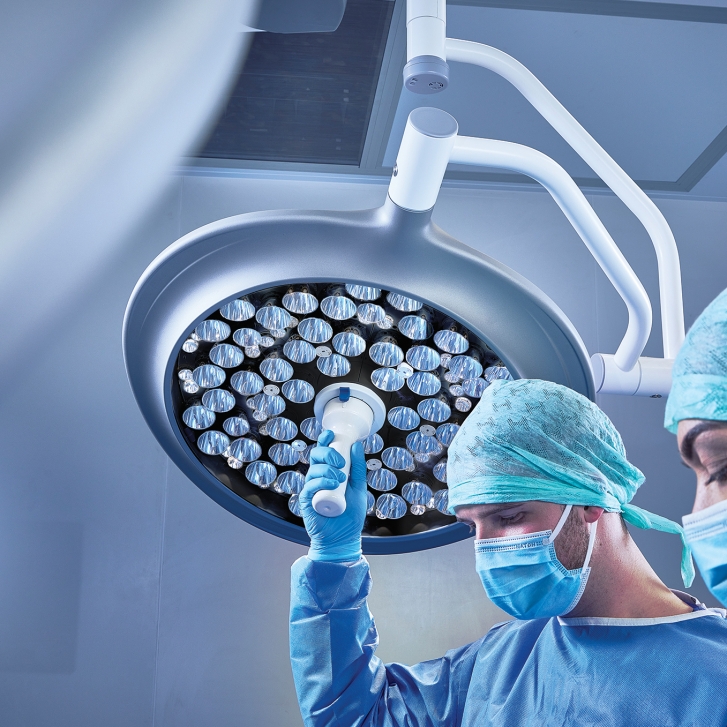
From data to action
Data has value only when it can lead to an appropriate response. iSense is built around a simple progression: notice the change, respond according to local protocol, and maintain awareness as the procedure continues.
Depending on the condition, possible responses may include reviewing ventilation, activating local smoke extraction, reducing unnecessary occupancy, adjusting room settings or moderating avoidable noise. The system does not replace clinical judgement, infection-control policy or estates management.
Three levels of value
At the first level, information is displayed locally to the operating-room team. At the second, sensor data can be made available to theatre-control and building systems. When Quasar Qi60 is integrated with iTCP, UCV and HVAC/BMS pathways, the data can inform adjustments and can support automated control loops where the hospital has designed and validated them.
At the third level, hospitals may choose to retain environmental data for later analysis alongside procedural or outcome information. That creates a data foundation for quality improvement without implying that the light itself performs clinical analysis.
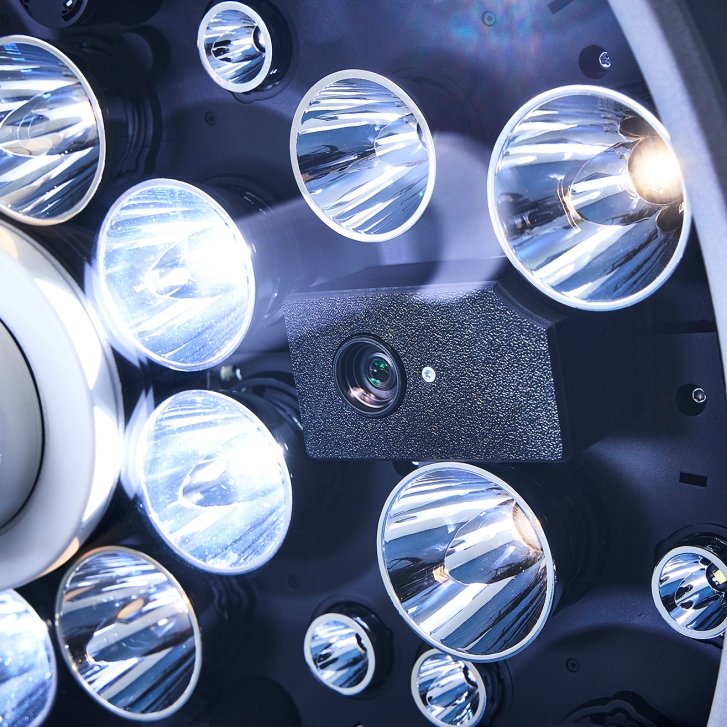
Model capability matters
iSense is a technology cluster rather than a promise that every iSense-labelled model contains every sensor. The current technical specification identifies Qi60 as the model with the full environmental sensing suite. Product-level capability should always be checked on the relevant model page.
Products
FAQs
On Qi60, iSense monitors air quality indicators including particulates, VOCs and NOx, as well as CO2, surgical smoke, noise, temperature and humidity. Exact capability varies by model.
No. iSense is designed to complement wider systems by providing information close to the surgical zone. It can feed data into the theatre-control ecosystem rather than replacing BMS, UCV, HVAC or local clinical judgement.
Not by itself. When integrated through theatre-control and ventilation systems, iSense data can support automated control loops configured by the hospital. The control logic and response remain part of the wider installed system.
The light is positioned directly above the surgical field, providing a useful point from which to monitor conditions close to the patient rather than relying only on room-level measurements.
No AI claim is required. iSense collects and displays data and can provide that data to integrated systems. Hospitals may separately analyse retained data using their own digital tools.
The current technical data identifies Qi60 iSense as the model with the full environmental sensor suite.