



Surgical Smoke Detection and Monitoring
Make surgical smoke visible, measurable and actionable.
Surgical smoke is generated when energy devices thermally disrupt tissue. It can contain fine particles, volatile compounds and biological material. Extraction remains the primary control measure; monitoring adds the missing layer of real-time awareness.
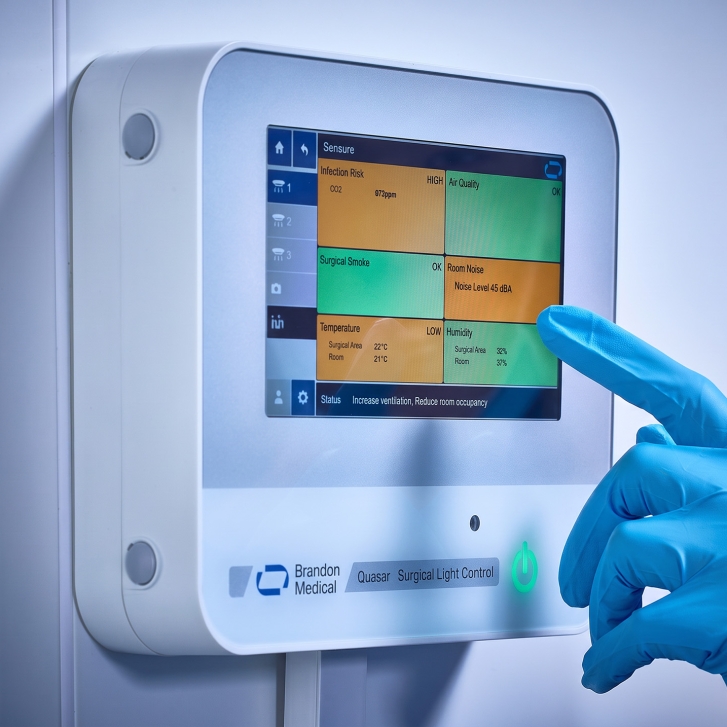
Monitoring close to the source
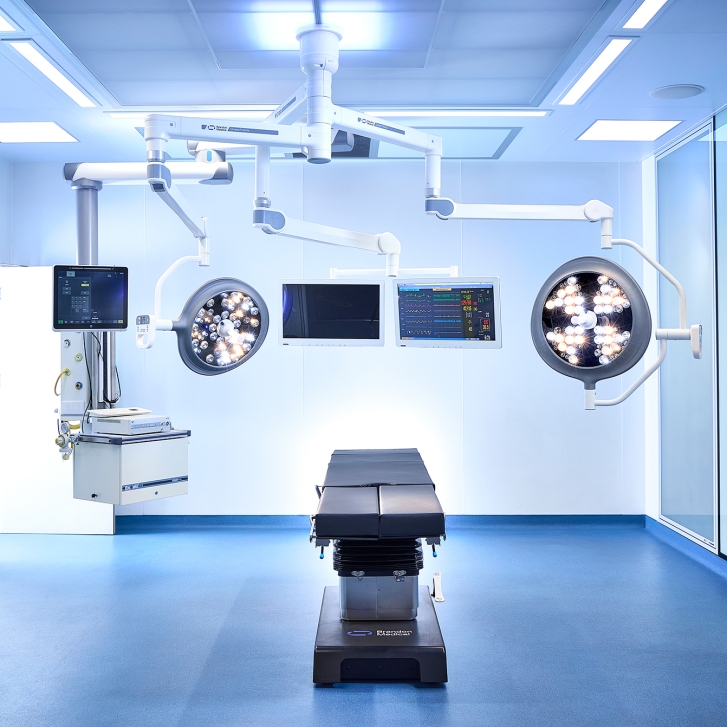
The surgical light is positioned above the patient and close to the area where smoke rises from the operative field. Qi60 iSense uses that position to monitor surgical-smoke-related conditions and particulate levels during the procedure, displaying information on the Quasar Surgical Light Control.
Why the evidence matters
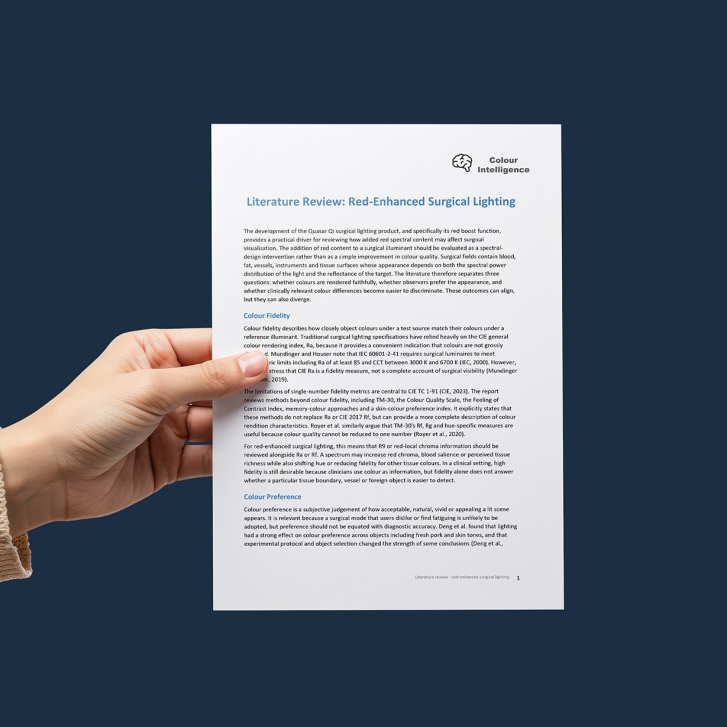
The Brandon Medical white paper reviews literature describing surgical smoke as a mixture of particulates and chemical compounds associated with respiratory and occupational-health concerns. It also highlights the importance of fine-particle measurement because a large proportion of surgical-smoke particles are small enough to penetrate deep into the respiratory system.
Why the evidence matters
The Brandon Medical white paper reviews literature describing surgical smoke as a mixture of particulates and chemical compounds associated with respiratory and occupational-health concerns. It also highlights the importance of fine-particle measurement because a large proportion of surgical-smoke particles are small enough to penetrate deep into the respiratory system.
Read the white paper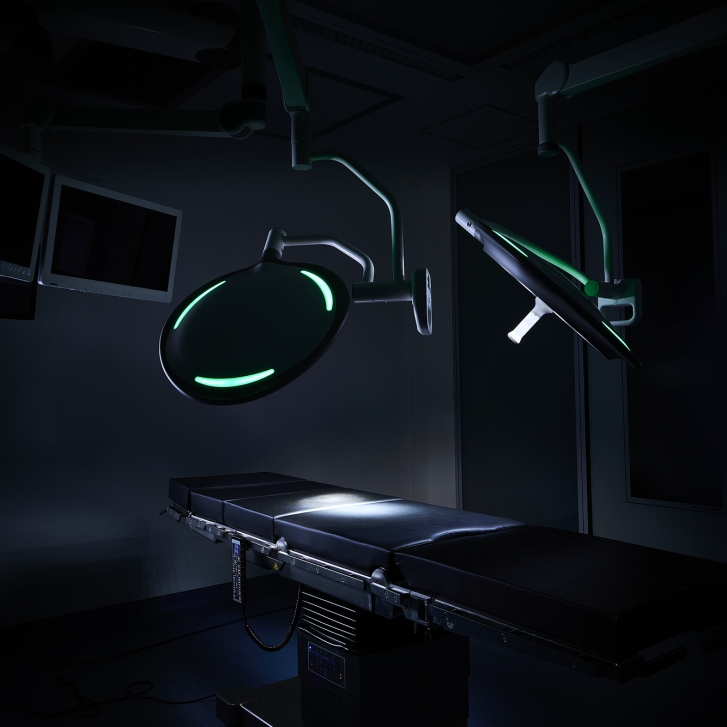
From local status to integrated control
At the first level, real-time status supports local team awareness. At a second level, smoke-related data can be made available to integrated theatre-control systems and may support automated ventilation or extraction responses where the hospital has designed the necessary control loop. At a third level, retained data can support longer-term environmental analysis.
Quasar Qi Features
Designed to do more than provide lux. Quasar Qi adds useful sensing, status information, workflow controls and integration-ready data.







Surgical smoke is the plume generated by thermal tissue-destruction processes such as electrosurgery, laser and ultrasonic devices. It can contain particulates, volatile compounds and biological material.
No. Qi60 iSense is a monitoring and awareness tool. Smoke should still be controlled using appropriate extraction, ventilation, PPE and local clinical protocols.
Qi60 sensing is integrated into the surgical-light platform above the operative field, placing the monitoring point close to the area where smoke rises.
The supplied evidence focuses on surgical-smoke-related particulate monitoring and air-quality indicators. The wider Qi60 suite also monitors VOCs and other environmental variables.
The current technical-data table specifies surgical smoke detection on Qi60 iSense.