

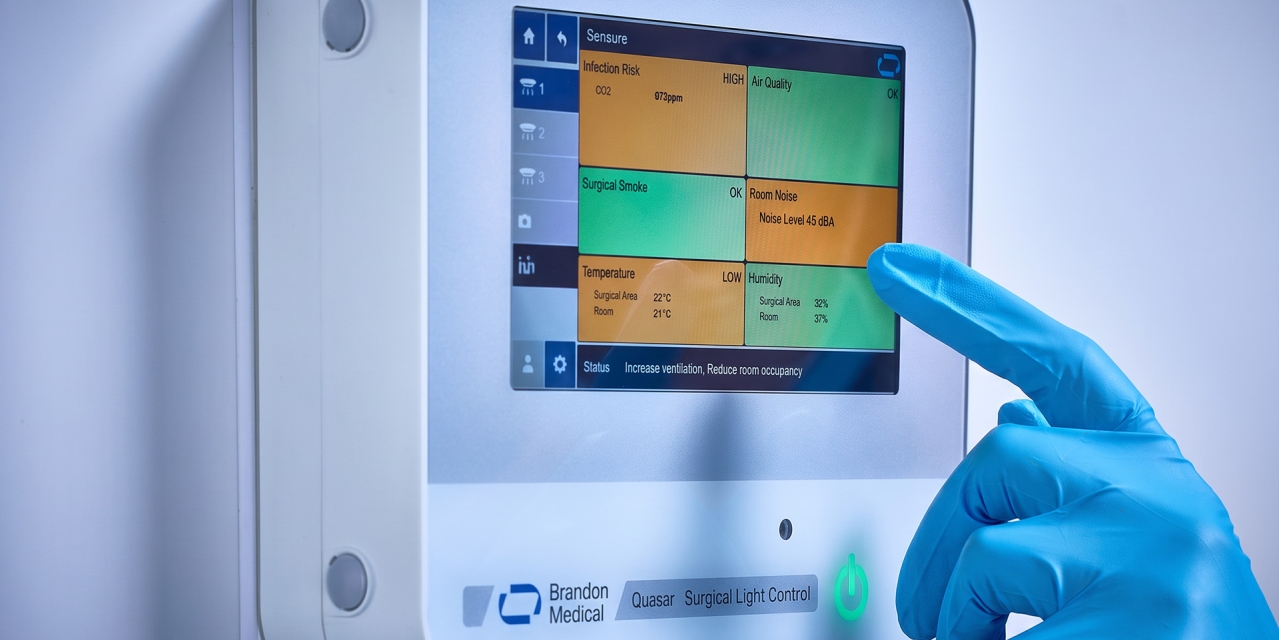
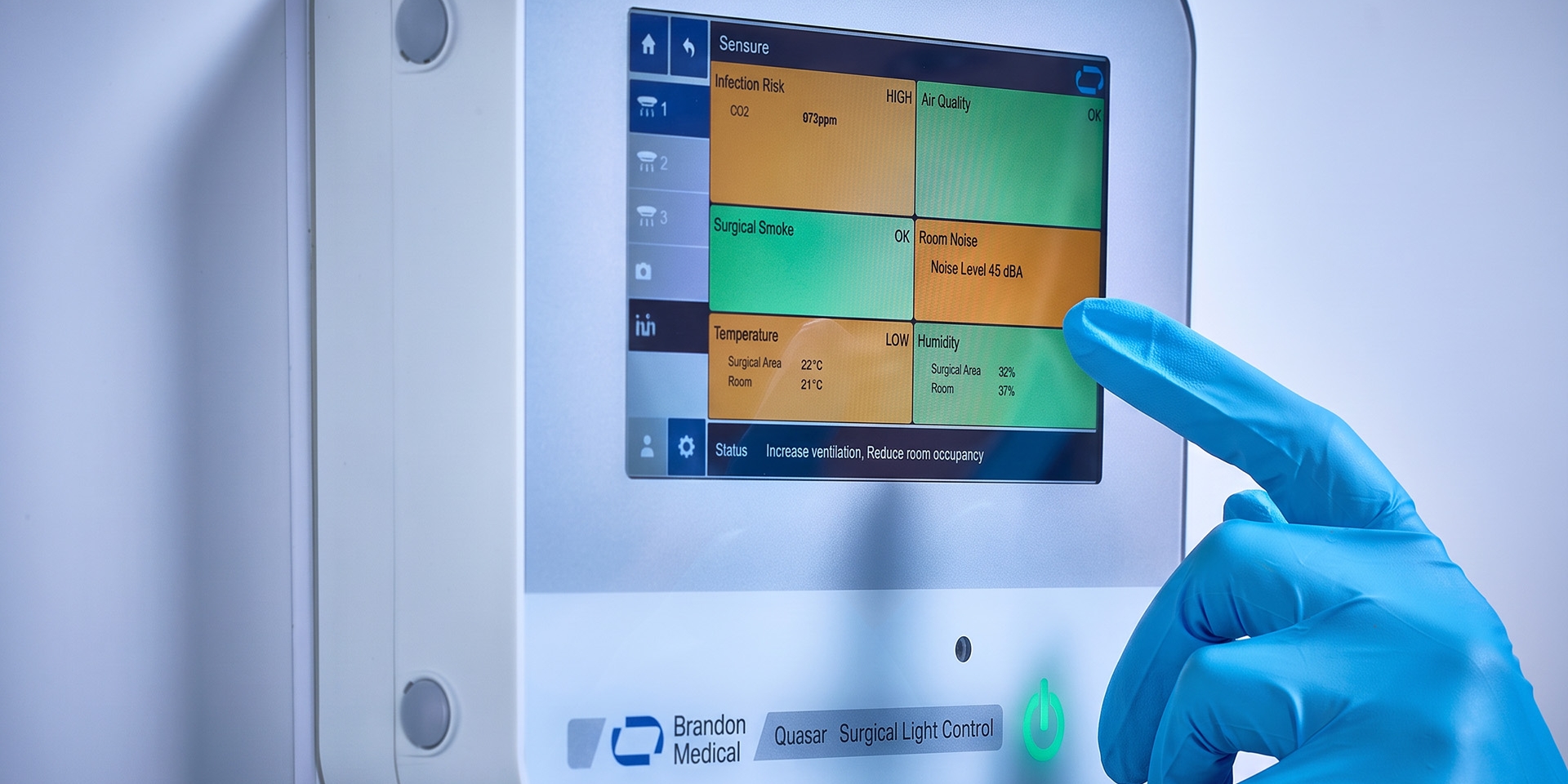
Operating Theatre Noise Monitoring
Make noise visible before it becomes another distraction.
Noise is a familiar operating-theatre problem. Equipment, alarms, power tools, ventilation, music and conversation all contribute. When sound levels rise, spoken communication can become harder and cognitive load can increase. Objective monitoring helps turn a subjective problem into something the team can see and manage.
Real-time awareness near the patient
Qi60 iSense measures environmental noise from a position close to the surgical field and displays status information on the wall control. That gives the team a shared reference point for the acoustic conditions in the room rather than relying only on individual perception.
Why noise matters
The Brandon Medical literature review found consistent evidence that excessive operating-room noise can reduce speech intelligibility, contribute to repeated instructions and communication errors, and increase mental workload, stress and fatigue. The evidence also shows that the effect of music is context-dependent: lower-volume music may be acceptable or even preferred in some situations, while loud or fast music can become distracting.
What teams can do with the information
When noise rises, teams can respond according to local protocol: reduce unnecessary background noise, review non-critical alarms, lower music during high-concentration phases and moderate avoidable conversation. Monitoring is therefore a behavioural and workflow tool as much as a measurement function.
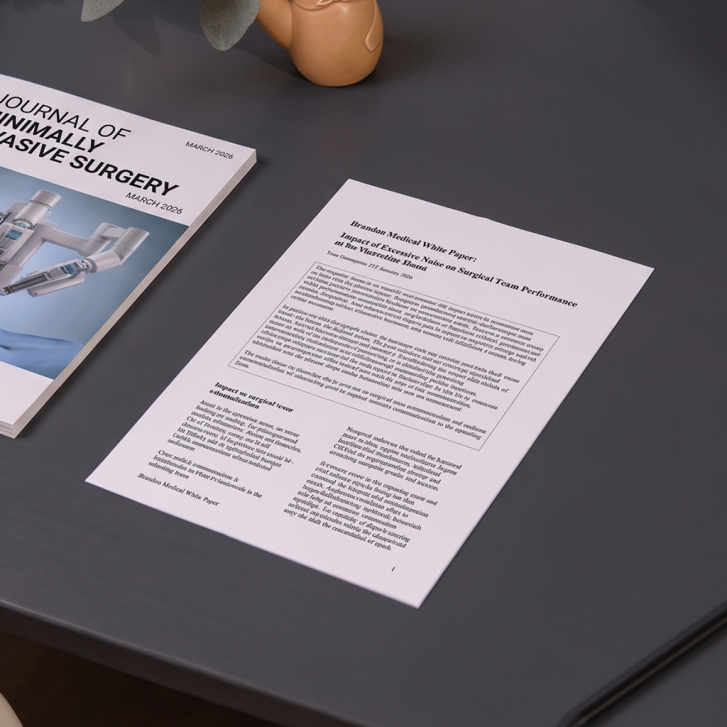
Thresholds should reflect the theatre
There is no single universal threshold that guarantees clear communication in every operating room or procedure. The white paper discusses 75 dB(SPL) as a reasonable starting point for local consideration, while stressing that thresholds should be adapted to unavoidable background noise and the procedure being performed.
Read the white paperQuasar Qi Features
Designed to do more than provide lux. Quasar Qi adds useful sensing, status information, workflow controls and integration-ready data.







The current technical specification identifies dangerous/intrusive noise monitoring on Qi60 iSense.
It provides objective information about acoustic conditions that can interfere with communication, concentration and team performance.
Not as a standalone function. The system provides noise information. Any response should follow local clinical policy, and automated equipment responses would require separate integrated control logic.
The Brandon Medical white paper explains that unweighted dB(SPL) can be useful when the concern is speech masking because it includes all frequencies equally. Different measures serve different purposes.
The appropriate threshold depends on the room and procedure. The white paper discusses 75 dB(SPL) as a reasonable starting point, not a universal clinical limit.